Coco Coir + Fine Horticultural Perlite
Expanded coco coir and fine-screened horticultural perlite provide the physical base for plug-cell filling, moisture movement, and oxygen availability in propagation trays.
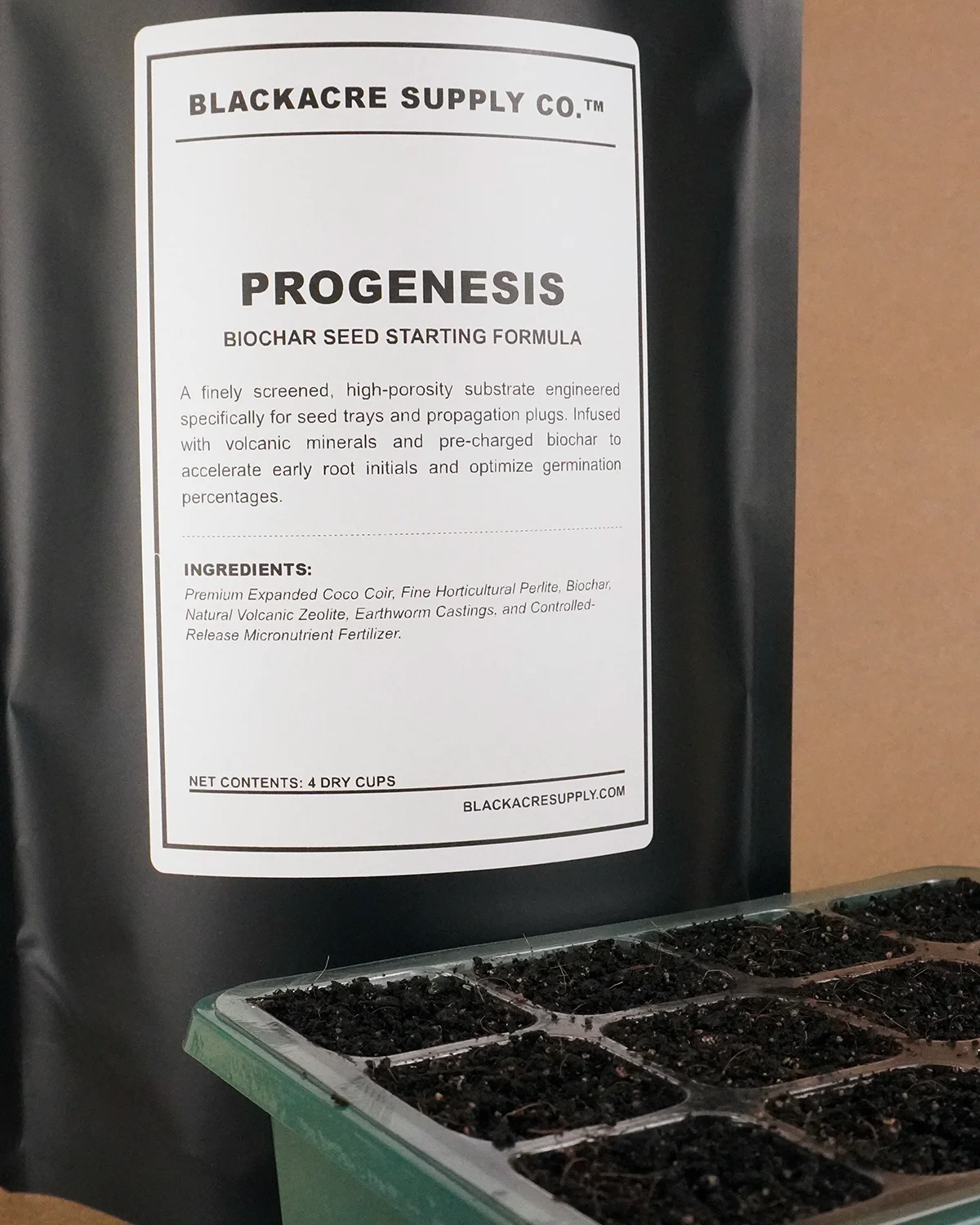
PROGENESIS is a fine-screened, peat-free propagation substrate built for seed trays, plug cells, small starts, and early root development. The mix is designed for close seed contact, even cell filling, balanced moisture movement, and steady oxygen availability during germination and early plug formation.
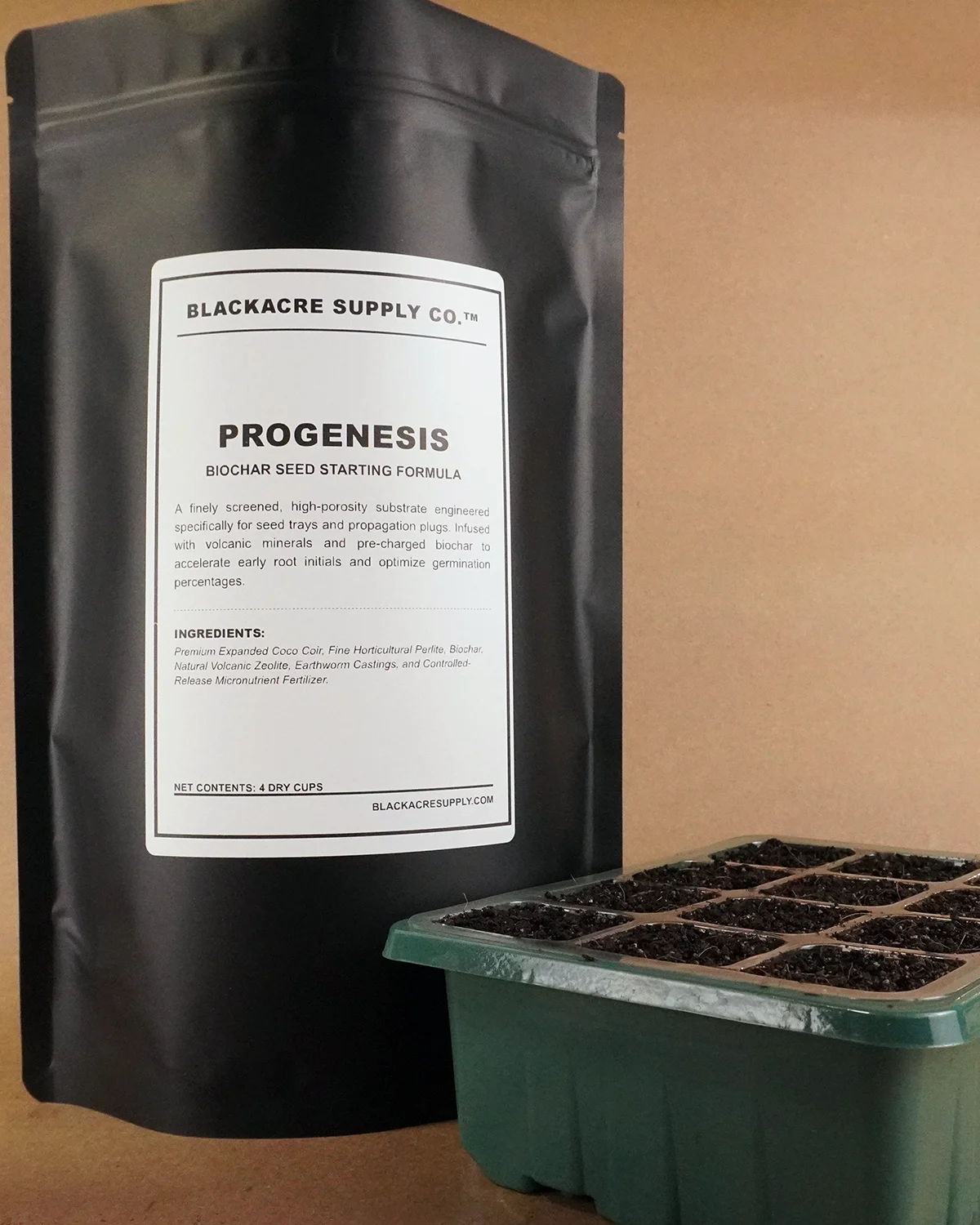
PROGENESIS is built from a fine-screened propagation base using mineral, carbon, and organic inputs selected for tray handling, early moisture balance, and clean plug development. Each batch is mixed by measured formula and screened for a consistent fine texture. Ingredient categories are disclosed for transparency while blend ratios remain proprietary.
Expanded coco coir and fine-screened horticultural perlite provide the physical base for plug-cell filling, moisture movement, and oxygen availability in propagation trays.
Biochar and natural volcanic zeolite are included as carbon and mineral components within the fine propagation profile.
Earthworm castings and a controlled-release micronutrient component are included as low-rate support inputs in the finished formula.
Before blending, key inputs are prepared for the role they play in the finished propagation substrate. Coco-based materials may be rinsed, buffered, screened, and batch-checked as needed to support cleaner handling, better calcium and magnesium balance, and more consistent early root-zone behavior.
Coco-based inputs are reviewed before use and may be rinsed or buffered when a component lot calls for additional preparation.
Because propagation work is sensitive to excess salts, PROGENESIS is built with extra attention to EC awareness, moisture movement, and fine texture consistency.
Internal quality checks may include EC review, pH awareness, moisture behavior, and texture inspection depending on the component lot and finished batch.
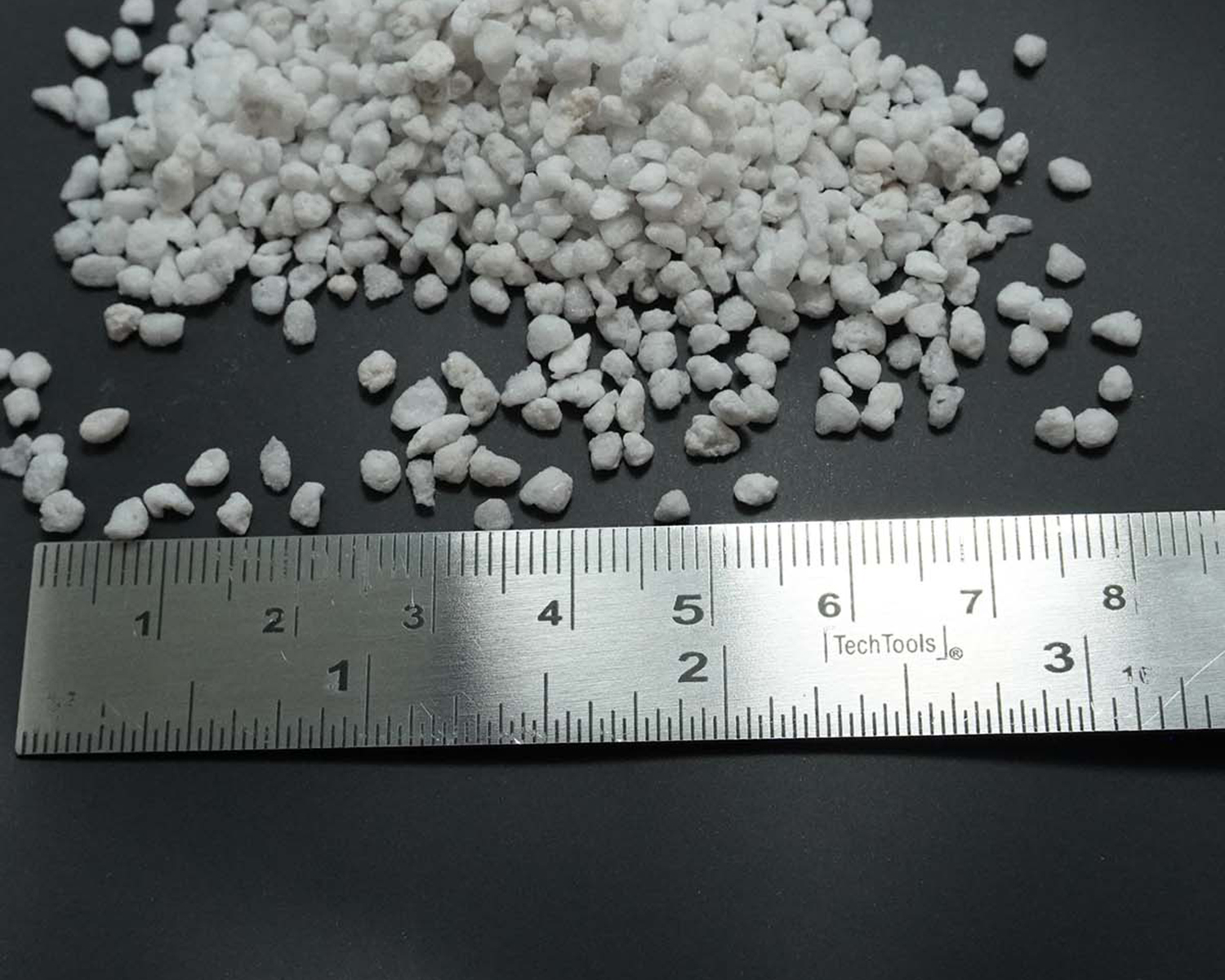
PROGENESIS uses the micro-fraction class from the BLACKACRE SUPPLY CO.™ screening workflow. The image is shown against the metric side of a ruler; sizing represents a nominal screen-class range rather than a guarantee that every particle is identical.
Small particle architecture helps improve seed contact and even cell filling while still preserving air movement inside compact propagation volumes.
Perlite is a natural expanded volcanic material. Screening targets a functional class range, so small variation within the finished mix is expected.
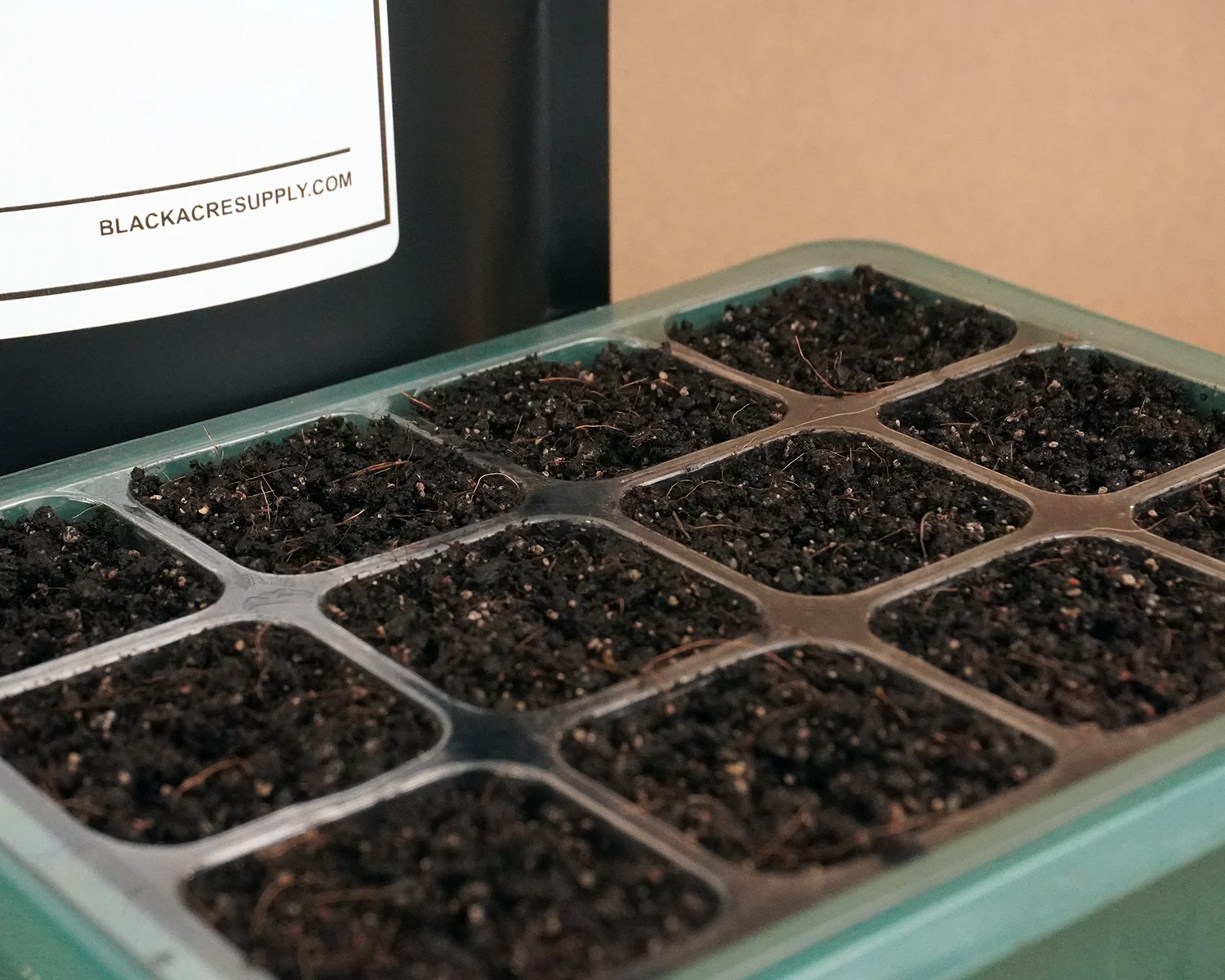
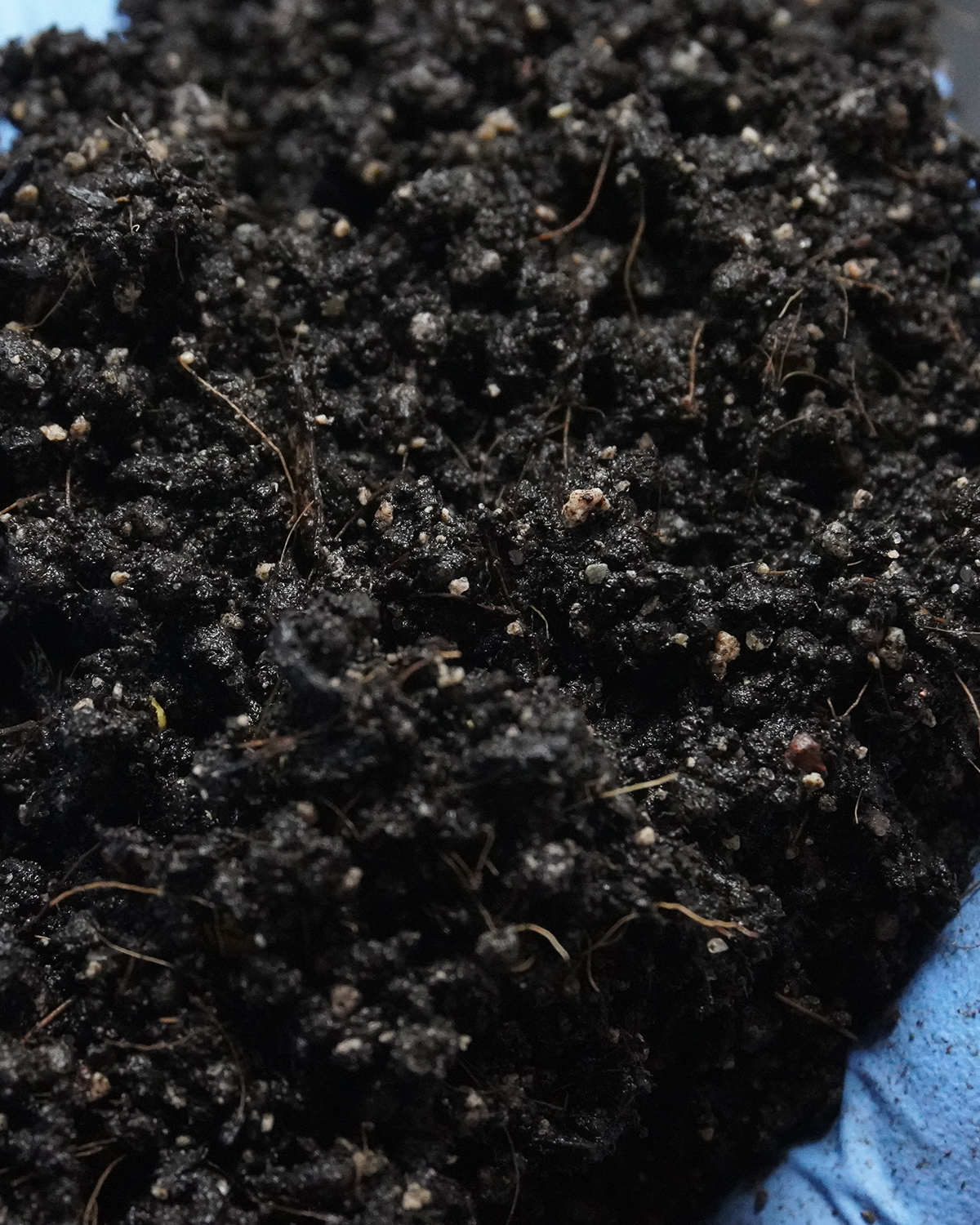
A closer look at the PROGENESIS mix. The fine-screened mineral fraction, carbon component, and organic amendments are blended for even filling and reliable handling in small plug cells.
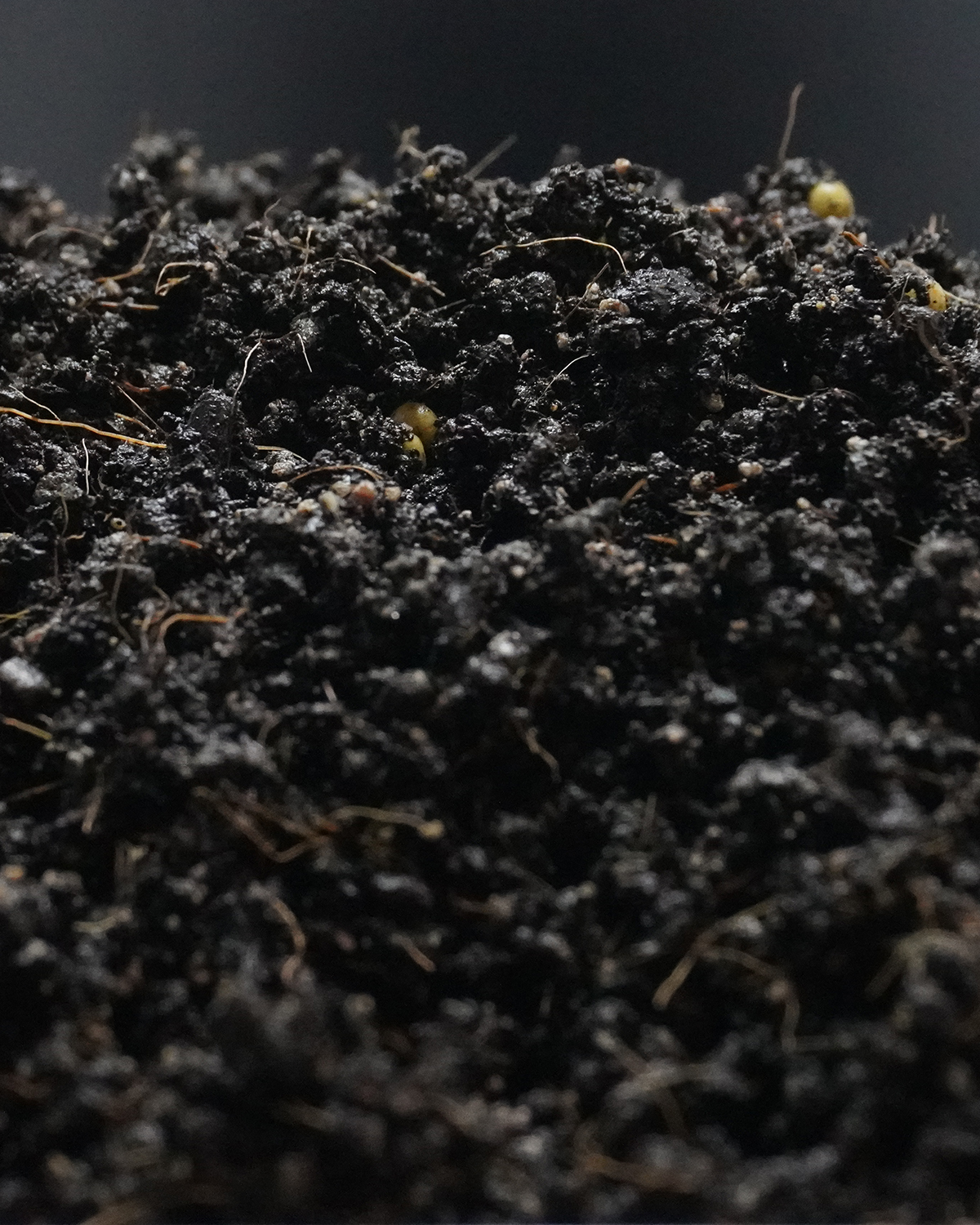
Macro detail showing the fine nominal aggregate class blended with carbon and organic stabilizing components.
Hand check reviewing flowability, light density, and how the mix responds during tray filling.
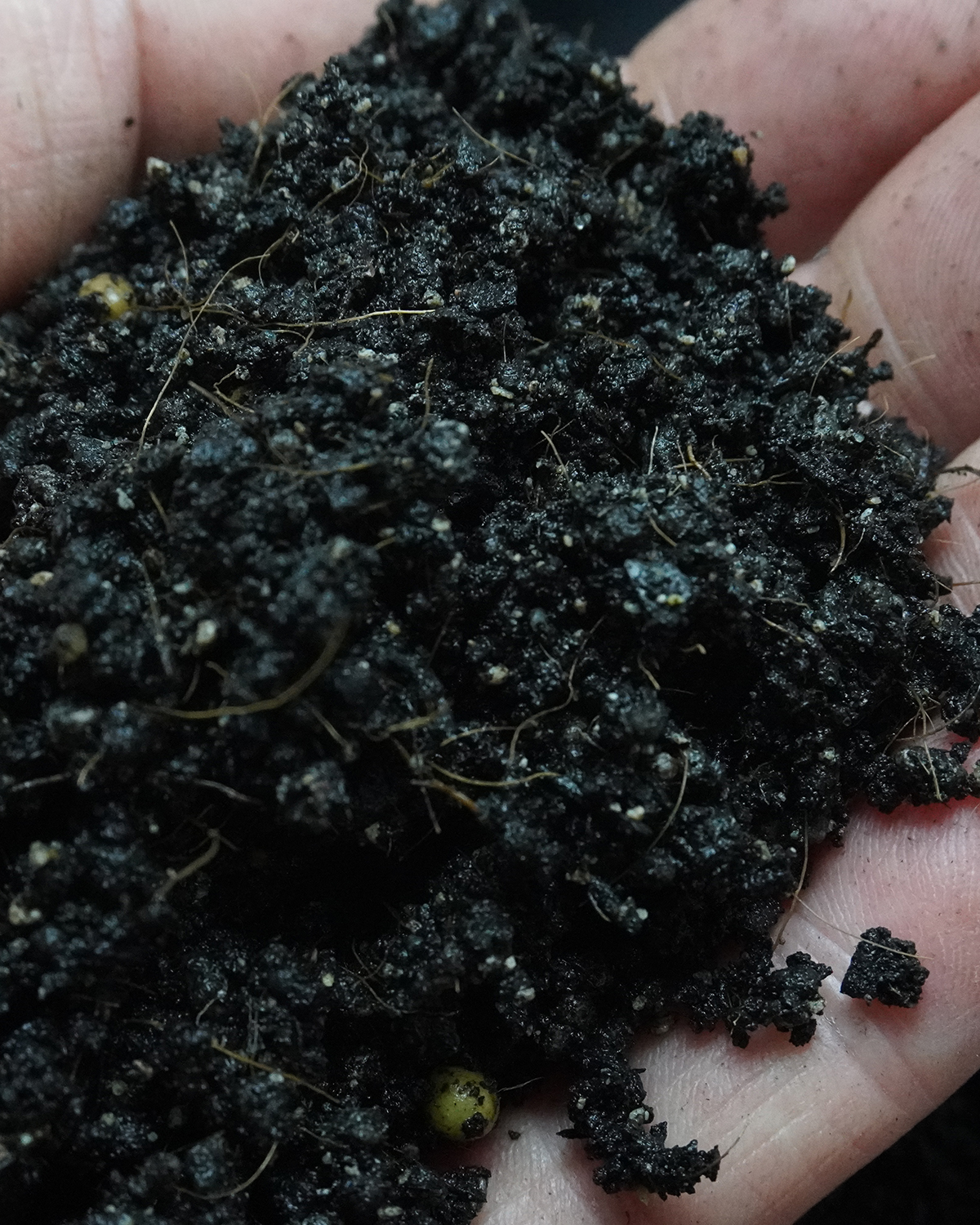
Bare-hand texture check showing a fine, even feel with reduced oversized fragments.
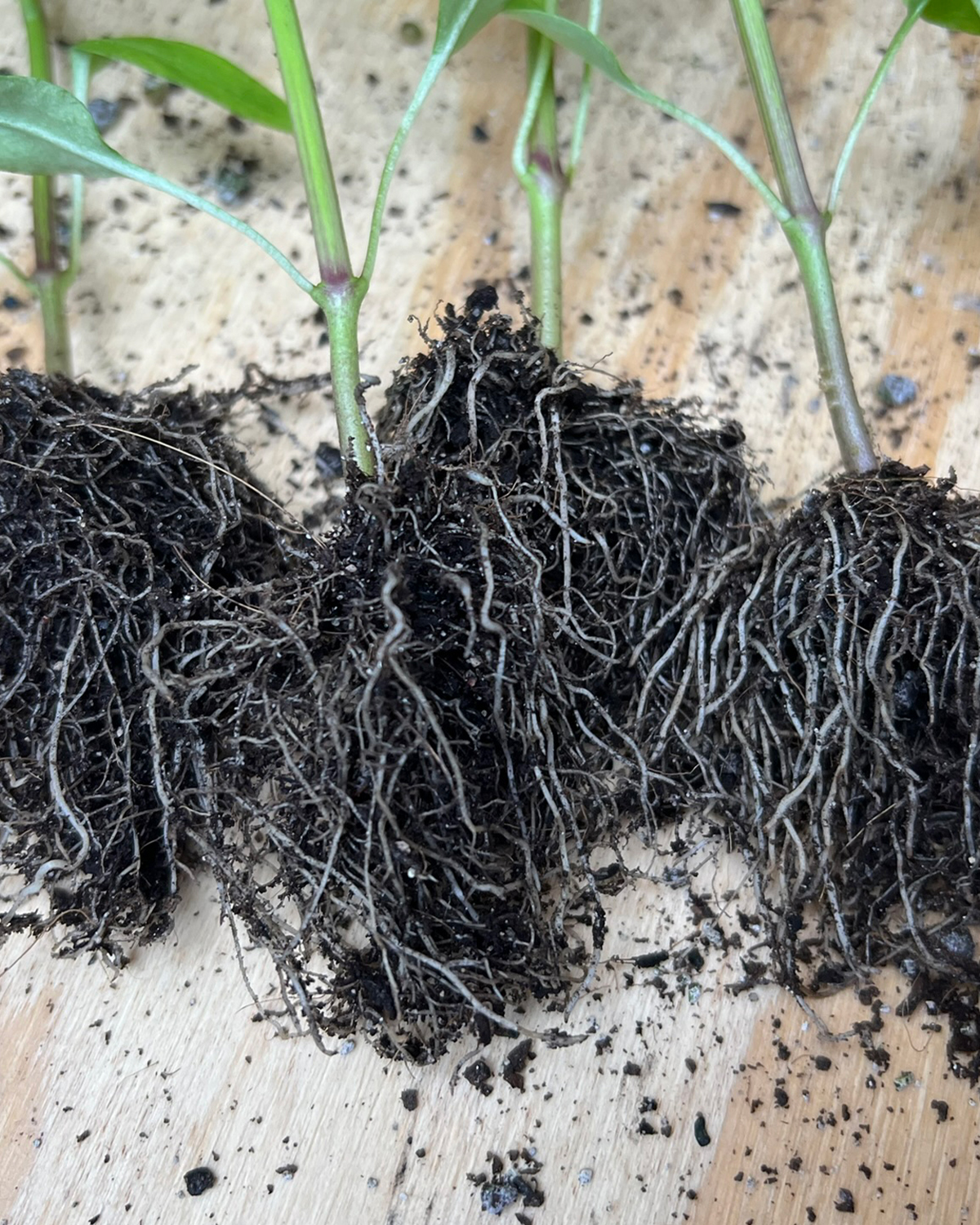
Tray work and plug checks showing how the mix handles filling, sowing, watering, and early root binding under normal use.
Fill trays or cells loosely, level gently, and water carefully after sowing. Do not compact heavily. Use containers or trays with drainage. Store sealed and dry until use.
Seed starting, propagation trays, plug cells, small-cell starts, herbs, vegetable starts, and early-stage seedlings.
Labeled at 4 dry cups. Packed above stated volume to allow for natural settling from screening, packing, and transit.
Use a loose fill and avoid heavy compression so the fine aggregate class can maintain air space inside small cells.
Measured by dry volume. Natural variation in perlite shape, color, and particle size is expected.